Honestly, the idea sounds perfect… until you start pricing equipment and realize a decent barbell costs more than a month of gym membership. Then there’s the space issue. And motivation. And that one treadmill everyone swears they’ll use daily… but doesn’t.
Still, a Gym at home keeps popping up in conversations, especially after people got used to working out in their living rooms. It promises convenience, privacy, and long-term savings. But is it actually worth it, or just another well-intentioned setup that collects dust?
This guide breaks it down properly. No hype. No generic advice. Just real-world pros, trade-offs, costs, and practical decisions so you can figure out if building a Gym at home makes sense for your lifestyle.
What Does “Gym at Home” Actually Mean?
A Gym at home doesn’t mean turning your place into a commercial fitness center. Most setups are way more practical than that. It’s usually just about carving out enough space to move, sweat, and repeat it consistently.
In real life, it tends to fall into a few rough levels, but people move between them over time.
1. Minimal Setup (The “just get started” phase)
This is what a lot of people begin with, especially if they’re unsure they’ll stick to it.
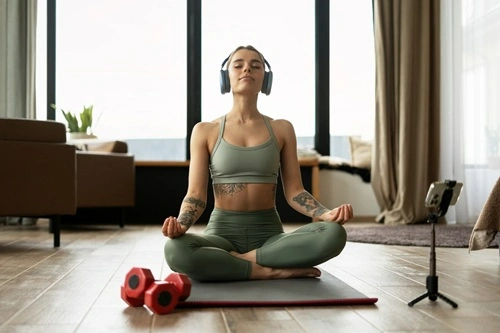
- A yoga mat rolled out in the corner
- Resistance bands tucked in a drawer
- One or two pairs of dumbbells under a desk
- Maybe a pull-up bar on a doorway
It’s simple, cheap, and honestly enough for full-body workouts. Think bodyweight training, light strength work, and quick sessions you can squeeze in before work or late at night.
2. Mid-Level Setup (Where it starts to feel like a real Gym at home)
This is where consistency kicks in, and people start upgrading.
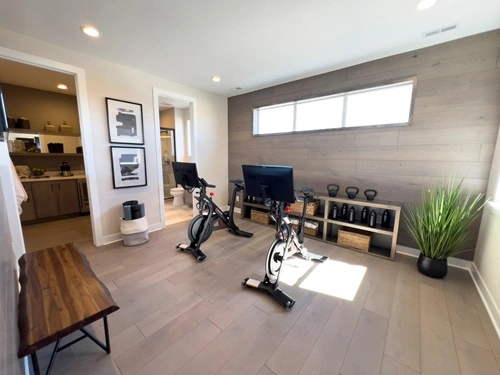
- Adjustable dumbbells so you’re not buying new weights every month
- A bench that doubles for storage or folds away
- A basic barbell with a few plates
- One cardio option, like a foldable treadmill or a stationary bike
At this stage, workouts feel more structured. You can follow proper strength programs, track progress, and not feel limited after a few weeks.
3. Full Home Gym (The “I’m all in” setup)
This is usually built over time, not all at once.
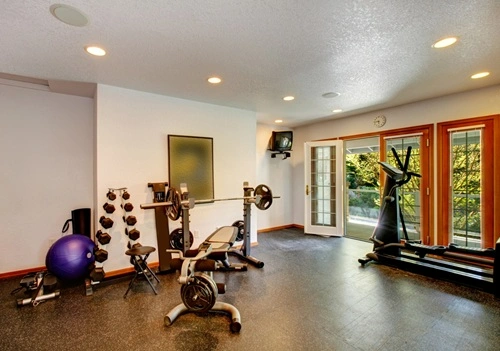
- A power rack that anchors the whole setup
- Olympic barbell with a full plate set
- A cable machine or pulley system for more exercise variety
- Dedicated cardio machines, sometimes more than one
This kind of Gym at home starts to replace a commercial gym completely. But it also takes space, planning, and a bit of commitment to justify the cost.
Is It Better to Build a Home Gym?
Short answer? It’s less about money, more about how you actually behave on a random Tuesday.
A Gym at home sounds like the “efficient” choice, but it only works if you’re the type who can start a workout without external pressure. No commute. No trainer waiting. No one else is around. Just you deciding to begin.
That’s harder than it looks.
A Gym at home tends to work better if:
- You often skip workouts because getting there feels like a chore
- Your schedule changes a lot (late meetings, early mornings, unpredictable days)
- You prefer quiet workouts without people around
- The nearest gym is far enough to become an excuse
In these cases, removing friction makes a real difference. Even a 20-minute session becomes doable when you don’t have to leave the house.
A traditional gym usually works better if:
- You feed off the energy of other people training
- You’re more consistent when there’s structure or a set environment
- You rely on machines you can’t realistically fit at home
- You enjoy classes, coaching, or just being “out” of your space
Some people need that separation. Home is for rest. The gym is for effort. Mixing the two doesn’t always click.
When Does a Gym at Home Actually Make More Sense?
A freelance writer sets up a small Gym at home. Nothing fancy. Adjustable dumbbells, a bench pushed against the wall, maybe resistance bands hanging on a hook. No commute, no time pressure. They end up training four or five times a week, even if some sessions are short.
Now compare that to someone with a full gym membership. Good facility, lots of machines, everything available. But they go twice a month. Maybe three if they’re feeling motivated.
On paper, the gym membership looks better. In real life, it’s not even close.
The setup that wins is the one that fits into your actual routine, not the one that looks more complete. And most of the time, a Gym at home wins for one simple reason. It actually gets used.
The Real Cost of a Gym at Home
This is usually the point where people either commit… or quietly close the tab.
A Gym at home can be cheap, or it can spiral fast depending on how you approach it. The mistake most people make is pricing everything at once, instead of building it in layers.
What People Think It Costs vs What It Usually Ends Up Costing
A lot of people go in thinking, “I’ll just grab a few dumbbells, and I’m set.”
Then it goes like this:
- You buy cheap dumbbells → they feel too light after two weeks
- You add a bench → now you need more space
- You realize switching weights is annoying → you upgrade to adjustable dumbbells
- Then you start thinking, “Maybe a barbell would help…”
That quick $150 setup quietly turns into $600 without you noticing.
A More Honest Cost Breakdown
Instead of wide ranges, here’s what people actually end up spending once they settle into a routine:
Trying things out with basic gear like dumbbells, bands, or a mat. $100 – $300
Upgrading equipment once you notice limits in your routine or progress. $400 – $900
Building a more complete setup with racks, heavier weights, and structure. $1,000 – $2,500
Most people don’t jump straight to a full setup. They climb into it.
The “Invisible” Costs That Catch People Off Guard
This is usually where budgets get stretched.
- Flooring: You drop weights once on bare tiles, you’ll understand why this matters
- Storage: Dumbbells on the floor get old fast, racks or shelves start to feel necessary
- Space trade-offs: That “extra corner” suddenly becomes a permanent workout zone
- Re-buying equipment: Cheap gear gets replaced, not upgraded
None of these is expensive alone. Together, they add friction to your budget.
Comparing It to a Gym Membership (The Part People Oversimplify)
A gym at $50/month looks cheaper. And on paper, it is.
But think about how it plays out in real life:
- You skip because it’s raining
- You skip because traffic is bad
- You skip because you’re tired after work
You’re still paying.
Now flip it.
With a Gym at home, even a short 20-minute session counts. You don’t need perfect conditions to show up. That’s where the value starts shifting.
Where the Break-Even Actually Happens
On paper, a $1,000 setup “pays for itself” in about 1–2 years.
But that’s only half the story.
If you:
- Skip workouts because you’re tired from commuting
- Missed sessions due to bad weather
- Or only go when you feel motivated
Then the real cost of a gym membership is higher than it looks.
A Gym at home flips that. Even shorter, more frequent workouts start to count, which makes the investment easier to justify.
So What’s a “Smart” Budget?
Not the biggest one. The one you’ll grow into.
A practical range for most people:
- Start at $300–$500
- Use it consistently for a few weeks
- Upgrade only when something actually limits you
That’s how you avoid wasting money on equipment that looks impressive but doesn’t fit your routine.
If someone sets up a full $3,000 gym and uses it twice a week, that’s wasted money.
But someone with a $400 Gym at home they use four times a week? That’s a better investment, every time.
The Real Pros of a Gym at Home (The Ones That Actually Matter)
You stop negotiating with yourself about time
This is the biggest shift, and it’s not just about skipping the commute.
It’s the little things:
- You don’t need a full hour to justify going
- You don’t delay because traffic looks bad
- You don’t think, “I’ll go later” and then never do
With a Gym at home, a workout can be 20 minutes and still count. That alone fixes a lot of inconsistency.
You train more often, even if sessions are shorter
People assume home workouts are less “serious.” But what usually happens is the opposite.
You might not do long sessions every time, but you:
- Sneak in quick sets between tasks
- Do shorter workouts more frequently
- Stay consistent without needing perfect conditions
Over a week, that adds up to more total work.
You control the environment completely
No waiting for equipment. No adjusting to someone else’s pace. No loud distractions unless you want them.
You can:
- Play your own music without headphones
- Set up your space once and keep it that way
- Move at your own pace without feeling rushed
It sounds small, but it removes a lot of friction.
It quietly saves money over time
Not instantly. And not if you overspend upfront.
But once your Gym at home is set:
- No monthly fees
- No travel costs
- No “I’m paying so I should go” pressure
It shifts from a recurring expense to something you already own.
The Cons Most People Underestimate
The upfront cost feels heavier than it should
Even a simple setup can feel like a big purchase when you’re not sure you’ll stick with it.
Spending $400 in one go hits differently than $40 monthly, even if it’s cheaper long-term.
You’ll hit limitations faster than you expect
At some point, you’ll notice:
- You don’t have the right weight
- You can’t do certain exercises
- You’re repeating the same movements
A Gym at home works best when you accept that it won’t have everything. It’s about enough, not everything.
Motivation becomes your responsibility
This is where most setups fail.
At a gym, just being there pushes you to do something. At home, it’s easier to skip because:
- No one sees you not showing up
- Your couch is five steps away
- You can always “do it later.”
That freedom is great… until it isn’t.
Your space changes, whether you like it or not
Even a small Gym at home takes over part of your space.
- Dumbbells don’t stay neatly tucked away forever
- Benches get left out
- That “temporary setup” becomes permanent
It’s not just about having space. It’s about being okay with giving it up.
What Equipment Do You Actually Need?
This is where most people mess up. Not because they buy the wrong things, but because they buy too much, too early. A Gym at home works best when it’s built around how you actually train, not how you imagine you’ll train.
Start With This: The “Covers Almost Everything” Setup
If you only buy a few things, make it these:
- Adjustable dumbbells
These do most of the heavy lifting. You can train your entire body with them, and you won’t outgrow them in a month like fixed weights. - A bench (flat or adjustable)
This opens up way more exercises than people expect. Pressing, rows, step-ups, even core work. Without it, your options feel limited fast. - Resistance bands
Cheap, easy to store, and surprisingly useful. Great for warm-ups, adding tension, or replacing machines you don’t have. - Exercise mat
Not exciting, but you’ll notice it immediately if you don’t have one. Especially for floor work, stretching, or anything involving your knees.
With just this setup, a Gym at home can handle strength training, basic conditioning, and even rehab-style workouts.
How to Know When It’s Time to Upgrade
Don’t upgrade because something looks cool. Upgrade when something starts to feel limiting.
That usually shows up like this:
- You’ve outgrown your dumbbell weight
- Certain exercises feel awkward or incomplete
- You’re repeating the same movements too often
That’s your signal.
Smart Upgrades (Only If You Actually Need Them)
- Barbell + plates
Worth it if you’re serious about strength training. Squats, deadlifts, presses. This is where progress scales long-term. - Pull-up bar
Simple, effective, and easy to ignore until you realize how useful it is for upper-body strength. - Kettlebells
Good for dynamic movements like swings or carries. Not essential, but useful if you like that style of training. - Cardio machine (bike, treadmill, etc.)
Only makes sense if you know you’ll use it regularly. Otherwise, it becomes the most expensive clothes rack in your house.
A Simple Rule That Saves You Money
If you haven’t thought, “I wish I had this” during a workout, you probably don’t need it yet.
That one habit keeps a Gym at home from turning into a pile of unused equipment.
People Also Ask these Questions:
What Gym Equipment Is Best for Osteoarthritis?
Low-impact equipment is the safest option because it reduces joint stress while still improving strength and mobility.
Best choices:
• Stationary bike
• Elliptical trainer
• Resistance bands
• Light dumbbells
• Rowing machine (light to moderate use)
Why it works:
These keep joints moving without heavy compression or impact.
Research:
CDC Arthritis Guidance
Arthritis Foundation
What Is the 3-3-3 Rule at the Gym?
A simple workout structure designed to remove confusion, especially for beginners.
It means:
• 3 exercises
• 3 sets each
• 3 times per week
Example:
Squats – 3 sets
Push-ups – 3 sets
Rows – 3 sets
Why it works:
It keeps things simple, prevents overthinking, and helps build consistency. In a Gym at home, it works even better because there’s no setup friction.
Should You Go to the Gym If You Have Diarrhea?
Short answer: no. Training won’t help recovery and can actually make things worse.
Main reasons:
• Higher risk of dehydration
• Low energy and reduced performance
• Possible contagious illness depending on cause
Medical guidance:
NHS advice
Mayo Clinic guidance
Simple rule:
If your body is trying to recover, even a light session in your Gym at home is still a bad idea. Rest first, resume later.
Common Mistakes When Building a Gym at Home
Most people don’t fail because they lack motivation. They fail because the setup slowly becomes inconvenient or incomplete in ways they didn’t expect.
1. Buying Too Much Too Soon
This usually starts with good intentions. You imagine what your training could look like, not what it currently is.
So you end up with:
- Heavy dumbbells you can’t fully use yet
- A barbell set before you’ve mastered basic form
- Extra attachments or machines “for later.”
The problem is, your Gym at home gets built around your future self instead of your current routine. And that future version doesn’t always show up.
A better approach is simple: buy what supports your current workouts, not what you think you’ll need in six months.
2. Ignoring Space Planning
On paper, the equipment looks compact. In reality, it spreads out fast.
A bench needs clearance. Dumbbells need floor space. A barbell needs a safe movement range. Suddenly, your “small corner setup” turns into a rearranged living room.
What people usually miss:
- You need space to move, not just store equipment
- Walls and furniture affect exercise range
- Flooring matters more than expected when weights are involved
A Gym at home only works long-term if you can train without constantly shifting things around.
3. No Workout Structure
This is where motivation quietly disappears.
You might have good equipment, but no clear plan. So workouts turn into random exercises instead of progression.
What that looks like:
- Doing the same 2–3 movements repeatedly
- Not tracking weight or reps
- Ending workouts early because you “ran out of ideas.”
Equipment doesn’t solve this. A Gym at home still needs structure, even something simple like repeating core movements across the week.
Without that, consistency fades fast.
4. Chasing Trending Setups
This is the social media effect.
You see a perfect-looking garage gym or a minimalist setup and try to copy it. But those setups are usually built around someone else’s goals, space, and training style.
What usually goes wrong:
- Buying equipment you don’t actually use
- Prioritizing aesthetics over function
- Ending up with a setup that looks good but feels awkward to train in
A Gym at home should match how you move, not how someone else trains online.
How to Build and Set Up Your Gym at Home?
This is where most people either create something practical… or slowly end up with equipment they don’t really use. The difference usually comes down to planning, not budget.
Step 1: Define Your Goal (Make It Real, Not Vague)
“Get fit” doesn’t help you choose anything.
Be more specific:
- If you want strength, you’ll need progressive resistance over time
- If your focus is fat loss, basic weights plus some cardio is enough early on
- If it’s general fitness, a mixed setup with simple tools works best
This step quietly decides what you don’t need, which matters just as much.
Step 2: Set a Budget (Then Split It Into Phases)
The mistake most people make is treating this as one big purchase.
A better way to think about it:
- Starter phase: $200–$500 (test consistency first)
- Expansion phase: $500–$1,000 (fill real gaps)
- Long-term phase: $1,000+ (only if training is stable)
This approach prevents overspending on equipment that doesn’t match your routine yet.
Step 3: Pick a Space That Doesn’t Fight You Daily
This isn’t about having a perfect room. It’s about avoiding friction.
Ask yourself:
- Can I leave things here without packing them away every time?
- Is there enough room to move safely without rearranging furniture?
- Will noise, layout, or foot traffic become a problem?
Typical setups:
- Spare room → easiest to maintain consistency
- Garage → best for larger setups
- Small corner → works if storage stays simple
If setup feels like a chore before you even start, it won’t last long.
Step 4: Start With Just Enough to Train Properly
Not minimal for the sake of it, but functional from day one.
That usually means:
- One adjustable weight option or light dumbbells
- A basic mat for floor work
- One resistance tool, like bands
If you can complete a full workout without improvising too much, you’re in a good starting place.
Step 5: Upgrade Only When Something Feels Missing
This is where people usually get it right or wrong.
Upgrade when:
- Weights no longer challenge you
- Certain movements feel limited
- You keep modifying workouts because something is missing
That’s when adding new equipment actually makes sense.
Not because it looks good. Because your training is asking for it.
What Should a Gym at Home Look Like in Practice?
Case 1: Small Apartment Setup That Actually Gets Used
A young professional working long hours in a city apartment doesn’t have space for anything big. No spare room. No garage. Just a small corner near the wall that doubles as storage.
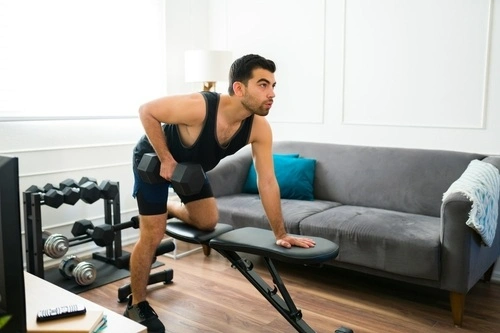
They keep it simple:
- Adjustable dumbbells tucked under the bed
- Resistance bands hanging on a hook
- A foldable bench that gets pulled out when needed
Total setup cost stays under $400.
At first, workouts are short—20 to 30 minutes before or after work. Nothing fancy. But because everything is already there, there’s no delay between deciding and starting.
Over time, something changes. The consistency builds up without much effort. Four workouts a week become normal, not forced.
The key here isn’t the equipment. It’s the fact that nothing gets in the way of starting.
Case 2: Full Garage Setup That Replaces a Membership
A fitness enthusiast takes a different path. They already know they’re committed, so they invest properly from the start.
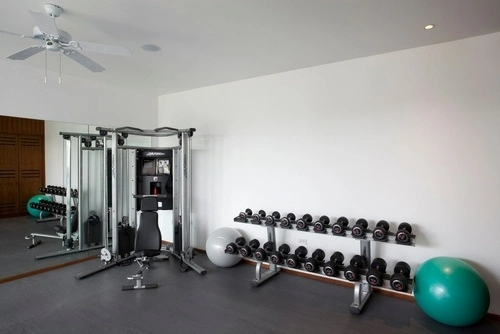
The setup includes:
- Power rack for compound lifts
- Barbell with full plate set
- Cardio bike for conditioning days
Total investment: around $3,000.
It’s not cheap, and it didn’t happen overnight. But the garage slowly turns into a dedicated training space.
No waiting for machines. No adjusting to gym hours. No distractions.
After a few months, the gym membership quietly becomes unnecessary. Not because the equipment is better, but because everything needed for their routine is already in one place.
Lifestyle Considerations (Where It Actually Matters)
Busy schedules aren’t just “busy” — they’re fragmented
It’s not only about having less time. It’s about how unpredictable the day gets.
A Gym at home works best when your schedule looks like:
- Meetings are shifting at the last minute
- Work spilling into evenings
- Random gaps of 20–30 minutes that come and go
In that kind of rhythm, the biggest advantage isn’t time saved. It doesn’t need a “perfect window” to start.
Families change how consistency works
For parents, the real challenge isn’t motivation. It’s an interruption.
You might plan a workout, then:
- A child wakes up early from a nap
- Dinner runs late
- Someone needs attention mid-session
With a home setup, workouts don’t need to restart your whole day. You can pause, split sessions, or keep things short without losing the entire effort.
That flexibility is often more valuable than equipment variety.
Climate quietly affects consistency more than people admit
This one sounds small until you live through it.
In places with:
- Heavy rain seasons
- Extreme heat in the afternoon
- Long commutes in uncomfortable weather
Going out becomes a decision every time, not a habit.
Training indoors removes that negotiation completely. You don’t check the weather before deciding to work out. You just start.
FAQs About Gym at Home
1. How much space do I actually need?
You can start with less space than most people expect.
A 6×6 ft area is enough for dumbbells, resistance bands, and floor-based training. It basically covers a yoga mat with room to move your arms and step around safely.
If you plan to add a bench or heavier lifting later, you’ll want a bit more breathing room—not because equipment is huge, but because lifting safely needs clear movement space around you.
2. Can I actually build muscle at home?
Yes, as long as you train with progression.
Muscle growth doesn’t depend on where you train. It depends on gradually increasing difficulty over time.
At home, that usually means:
- Increasing dumbbell weight
- Slowing down movements for more resistance
- Using harder exercise variations
The real limit isn’t “home vs gym.” It’s whether your setup lets you keep challenging your muscles over time.
3. Is cardio necessary if I’m training at home?
It depends on your goal.
For strength and muscle gain, cardio is optional and mostly used for general health or recovery.
For fat loss or endurance, it helps, but it doesn’t need to be complicated. You don’t need machines to make it effective. Walking, skipping rope, or short intervals are enough when done consistently.
The common mistake is thinking cardio requires expensive equipment. It doesn’t.
4. What’s the biggest mistake people make when starting a home setup?
Buying too much too early.
People often start with excitement and overbuild their setup before they even know their routine. Then half the equipment doesn’t get used.
A better approach is starting simple, then adding only when something feels limiting in your workouts. That keeps both cost and clutter under control.
5. Will I stay consistent working out at home?
It depends less on equipment and more on structure.
A home setup makes it easier to start, but consistency still comes from routine. Without a plan, it’s easy to skip because nothing is forcing you to show up.
People who stay consistent usually:
- Train at the same time each day
- Keep workouts simple and repeatable
- Avoid overthinking what to do next
So the setup helps, but discipline still drives the results.
Conclusion
A Gym at home setup sounds like the easy answer, and in many cases, it actually is. The biggest advantage isn’t fancy equipment or saving money right away. It’s removing the small barriers that usually break consistency. No commute. No waiting for machines. No deciding whether the weather or traffic is worth dealing with. When training becomes something you can start instantly, it’s much easier to keep it going.
But the deeper pattern we saw throughout this guide is simple: convenience only works if it’s matched with structure. Without a plan, equipment doesn’t fix anything. It just sits there. That’s why the step-by-step approach matters—starting with a clear goal, setting a realistic budget, choosing a usable space, and building gradually based on what your routine actually demands. The same applies to common mistakes, too, like overbuying early or copying setups that don’t fit your lifestyle.
If you’re still unsure, don’t treat it like a big decision you have to get perfect. Start small. A pair of adjustable weights, a mat, and maybe resistance bands. Train for a few weeks and watch what actually happens in your schedule. If it sticks, you’ll naturally know what to add next. If it doesn’t, you’ve avoided turning a good idea into an unused corner of your room.