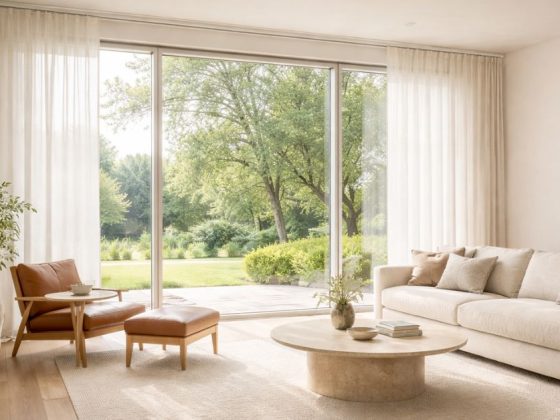
It’s kind of frustrating how long we’ve treated windows like an afterthought. Slap on some plastic blinds, twist a wand, call it done. Harsh light in the morning, dim cave by noon, zero personality all day. That setup worked for years, sure—but it never really felt right.
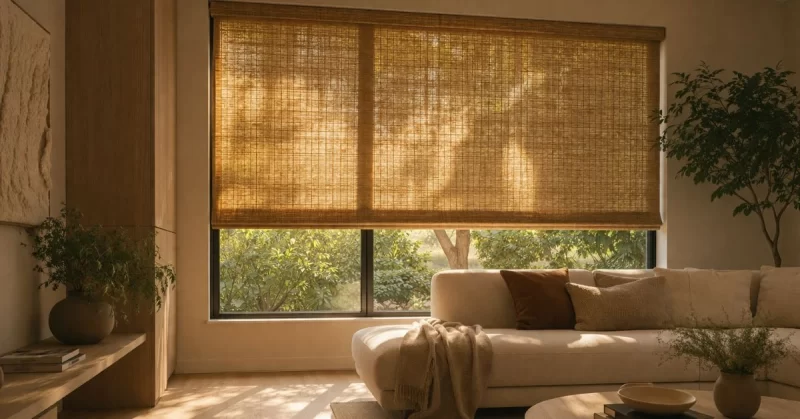
Lately, though, things are shifting. People are starting to see windows less like something to block and more like something to shape. Light isn’t just brightness anymore. Its texture. Mood. Temperature. And woven wood shades—made from bamboo, jute, seagrass—are quietly becoming one of the most effective ways to control all of that without overcomplicating your space.
This isn’t just a design trend. It’s more like a rethink of how a room works.

What Actually Happens When You Switch to Woven Shades
Let’s be honest. Most window coverings behave like switches. Open or closed. Bright or dark. That’s it.
Woven shades don’t work that way.
Instead of blocking light, they filter it. The difference sounds subtle, but in real life, it’s huge.
Because these materials are natural, every strand varies slightly in thickness. That unevenness creates tiny gaps in the weave. When sunlight hits, it doesn’t blast through in one direction—it scatters. Softens. Breaks apart.
What you get is:
- Less glare on screens
- No washed-out walls
- A warm, diffused glow instead of harsh beams
It turns your window into something closer to a light panel than a hole in the wall.
You’ll notice it most in the late afternoon. That golden light doesn’t just enter the room—it kind of floats across it.
The “Imperfect Edge” You’ll Definitely Notice
Here’s something no one tells you until after installation.
Woven shades don’t sit perfectly flush.
And that’s not bad craftsmanship. It’s just physics.
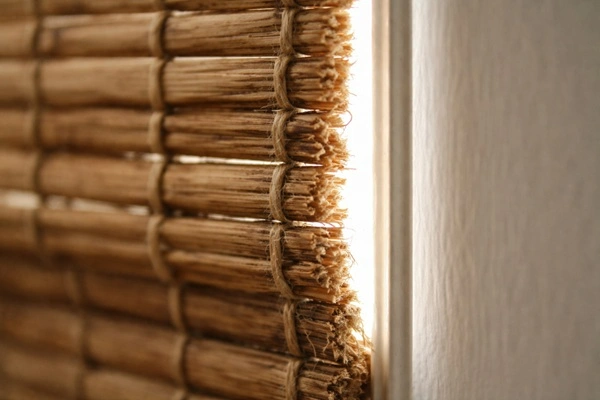
Unlike vinyl or aluminum blinds, natural fibers can’t be cut with surgical precision. The edges are slightly textured, sometimes even a bit fuzzy. Because of that, installers leave a small clearance on the sides so the material doesn’t scrape or snag against the frame.
Result?
A thin sliver of light on either side when the shade is fully down.
It’s usually minor. But if you’re expecting total blackout, this will catch you off guard.
How to deal with it
- Use an outside mount (shade sits over the frame) to minimize gaps
- Pair with curtains if you want a more sealed look
- Accept it as part of the aesthetic—because honestly, most people do after a few days
It’s one of those details that feels noticeable at first, then fades into the background.
Quick Expert Answer
Why is there a gap of light on the sides of my woven shades?
A: Because natural fibers have textured, slightly irregular edges, they cannot be cut as flush as synthetic rollers. Installers leave a small “light gap” to prevent the material from scratching your window frame. If you need total darkness, consider an outside mount or pairing them with side drapes.

Day vs Night: The Privacy Flip No One Mentions
This part surprises people the most.
During the day, woven shades give you a sense of privacy. From outside, your window looks muted, almost opaque. You can see out, but others can’t really see in.
At night? That completely reverses.
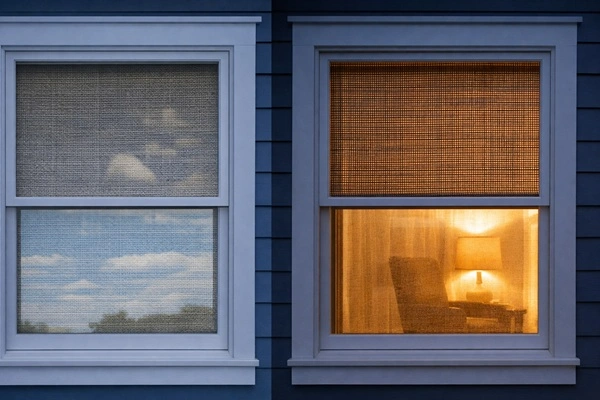
Once your indoor lights are on, your window turns into a softly glowing panel—and those tiny gaps in the weave start working against you.
From outside, silhouettes become visible. Movement is noticeable. It’s not full transparency, but it’s enough to feel exposed if your window faces a street or a neighbor.
The fix is simple—but essential
If privacy matters, add a liner.
You’ve got options:
- Privacy liners: still let light through, but blur visibility
- Blackout liners: full privacy and total darkness
- Top-down bottom-up designs: flexible coverage depending on time of day
For bedrooms and ground-floor windows, this isn’t really optional. It’s just part of the setup.
Quick Expert Answer
Do woven wood shades provide privacy at night?
A: During the day, woven shades offer excellent privacy. However, at night with indoor lights on, the weave becomes translucent, creating a “silhouette theater” effect. A privacy or blackout liner is essential for street-facing windows.
Matching the Material to the Room (This Matters More Than Style)
Not all woven shades behave the same. Where you install them changes everything.
1. South-Facing Windows (aka the sun magnets)
If your window gets strong sunlight for most of the day, expect change over time.
Natural fibers react to UV exposure. Darker tones will gradually lighten—think walnut shifting toward honey or sand.
This isn’t damage. It’s aging. Some people even like it because it gives the shade a lived-in, evolving look.
If you want to slow that process:
- Choose lighter tones to begin with
- Add a UV-blocking liner
- Rotate or adjust shades periodically if possible
But honestly, a bit of fade often looks better than a static, artificial finish.
Quick Expert Answer
Will my bamboo or jute shades fade in the sun?
A: Yes. Natural fibers are UV-sensitive and will develop a “patina” over time. Darker stains like walnut will gradually lighten toward honey or straw tones. To slow this process, choose lighter natural colors initially or add a UV-blocking liner to the back of the shade.

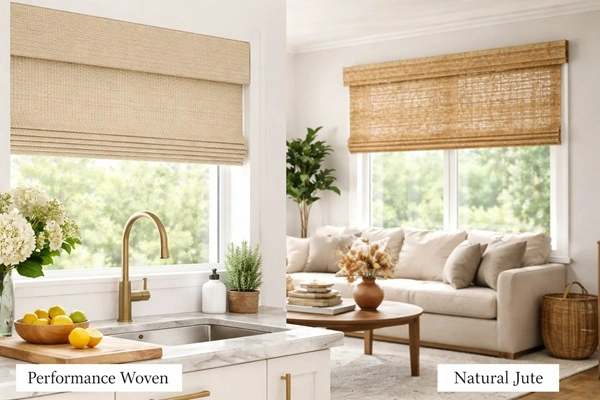
2. Kitchens and Bathrooms (humidity zones)
This is where natural materials struggle.
Steam from cooking or showers can cause:
- Warping
- Expansion
- Mold growth over time
That doesn’t mean you can’t get the look. You just need a different version.
Look for “performance woven” shades. These are made from synthetic fibers designed to mimic bamboo or grass, but they handle moisture much better.
They’re especially useful near:
- Kitchen sinks
- Bathroom windows
- Laundry areas
You get the same visual warmth, without the maintenance headache.
The Weight Problem (Yes, It’s Real)
Here’s something people underestimate: woven wood shades are heavy.
A small window? No issue.
A large window? Completely different story.
Real bamboo or wood-based materials can weigh significantly more than polyester or vinyl blinds. Over time, that weight puts stress on the mounting hardware.
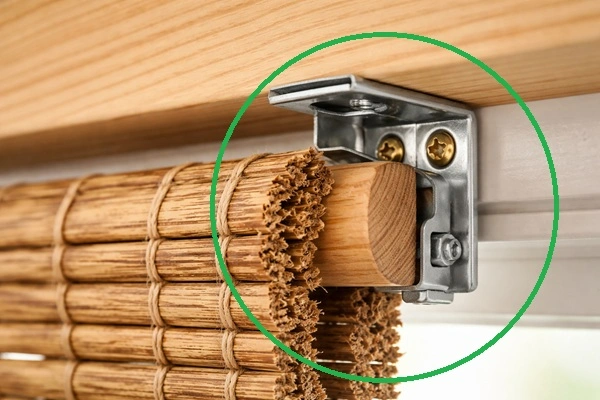
If it’s not installed correctly, you might see:
- Sagging in the middle
- A curved bottom edge
- Loosening brackets
What to do before installation
- Make sure brackets are anchored into studs, not just drywall
- Consider multiple mounting points for wide windows
- Ask about reinforced headrails for larger spans
It’s not complicated, but it’s one of those things that matters months later, not day one.
Quick Expert Answer
How do I stop my large woven shades from sagging in the middle?
A: Due to the weight of real wood, large shades require reinforced headrails and mounting brackets anchored directly into wall studs rather than just drywall. For extra-wide windows, using multiple smaller shades on one headrail can prevent the “bowing” effect over time.
Seasonal Changes: Your Shades Will Shift (Slightly)
Natural fibers don’t stay static. They react to air conditions.
In humid weather, they absorb moisture and relax. In dry conditions, they tighten up.
The difference is small—usually less than half an inch—but it’s enough to notice if your shade was installed with very tight clearance.
You might see:
- Slight length changes
- A softer or tighter weave feel
- Minor shifts in how it hangs
Practical tip
Leave a bit of breathing room when measuring. Especially at the bottom.
You don’t want the shade resting heavily on the sill in humid months. That’s where wear starts.
Maintenance: Easier Than You Think, But Not Zero Effort
Natural textures look great, but they do collect dust more easily than flat blinds.
Good news—it’s not high maintenance.
Simple routine
- Weekly or biweekly: Light vacuum with brush attachment
- Monthly: Quick wipe with a dry microfiber cloth
- Avoid: Water, harsh cleaners, or soaking
If you’ve ever tried cleaning greasy kitchen blinds, this will feel refreshingly simple.
Quick Expert Answer
How do you clean woven wood shades?
A: Use a vacuum with a soft brush attachment weekly to remove dust from the textured weave. Avoid water or chemical cleaners, as natural fibers like jute and bamboo can warp or grow mold if they remain damp.
Why Designers Keep Coming Back to Woven Shades
There’s a reason these aren’t just a passing trend.
They solve a problem most people don’t realize they have.
Modern homes tend to have:
- Hard surfaces (tile, glass, metal)
- Flat lighting
- Minimal texture
Woven shades fix all three in one move.
They add:
- Warmth without clutter
- Texture without bulk
- Light control without darkness
It’s subtle. But it changes how a room feels almost immediately.
How to Choose the Right Woven Window Shade (Without Overthinking It)
If you’re standing in a showroom or scrolling online, options can feel overwhelming fast.
Here’s a straightforward way to narrow it down.
Step-by-step
- Start with light needs
- Bright room? Go semi-sheer
- Bedroom? Add blackout liner
- Check the room conditions
- Humid space? Choose performance materials
- Dry living areas? Natural fibers are fine
- Think about color shift
- Dark tones will fade
- Light tones stay more consistent
- Measure properly
- Decide inside vs outside mount first
- Allow for slight natural variation
- Plan for privacy
- Especially for street-facing windows
Keep it simple. Most regret comes from skipping step one or step five.
The Real Payoff: It Feels Different, Not Just Looks Different
There’s something subtle but noticeable about living with filtered light instead of blocked light.
Morning feels softer. Afternoon glare stops being annoying. Even artificial light at night feels less harsh when it hits textured surfaces.
It’s not dramatic. It’s not flashy.
But after a few days, going back to standard blinds feels… flat.
Conclusion
Woven window shades aren’t just a style choice. They change how your space behaves throughout the day. Light becomes less aggressive, rooms feel warmer, and the whole environment shifts in a way that’s hard to replicate with synthetic materials.
They do come with trade-offs. Slight gaps, changing tones, a bit of maintenance. But none of these are deal-breakers if you understand them upfront. In most cases, they’re just part of working with real materials instead of factory-perfect ones.
If your room feels too bright, too harsh, or just a bit lifeless, don’t start with furniture or paint. Start with the window. Change how light enters, and everything else starts to fall into place.